German Marxists in Naples
In the mid-1920s Naples became a refuge for a group of Marxist theorists loosely associated with what later came to be known as the Frankfurt School. The city had long been a popular destination among literary circles: between the 17th and 19th Century, it was an essential stop on the Grand Tour, the coming of-age journey to explore the roots of classical culture in Italy. But if the Grand Tour Naples was celebrated for its lemon-trees, sun and infinite blue sky, as famously immortalised by Goethe in his Italian Journey (1817-18), what fascinated the critical theorists in the 1920s wasn’t its landscape or its ties with pre-modern tradition. On the contrary, they were turning to the city to seek new ways of understanding modernity.
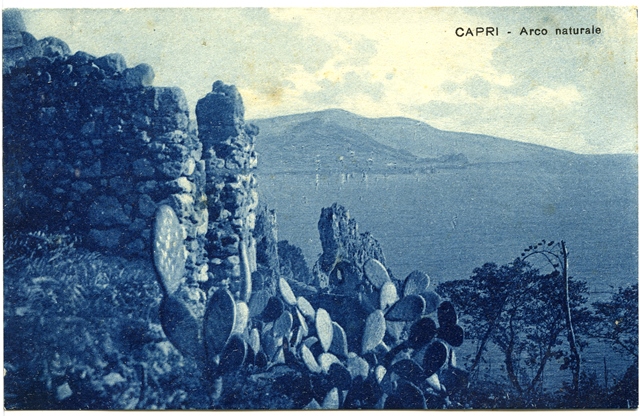
The most notable concept to emerge from these reflections was that of porousness, coined by Walter Benjamin and Asja Lacis in their Naples essay in 1925. The two described the city in terms of its peculiar Porosität, a perpetual, perceptible threshold state where every plane of existence, be it architectural, social or ontological, seems to be intersecting and overflowing in one another. Benjamin and Lacis met in Capri in 19241 and started an on-off-relationship which would last several years. Enthralled by the vitality and chaos of nearby Naples, they soon started exploring the city together, often in the company of another German expat, the Marxist intellectual Alfred Sohn-Rethel.
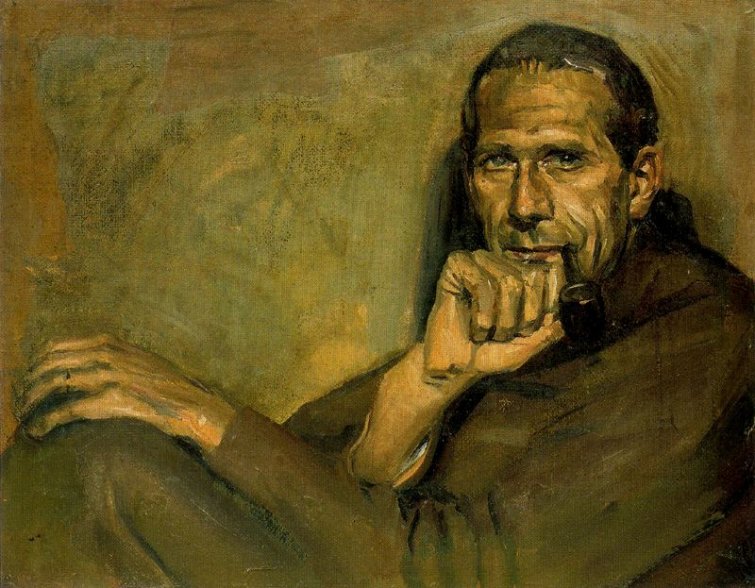
Sohn-Rethel had moved to Capri in 1924, eager to escape the life his family had planned for him in Germany. As the son, grandson, and nephew of celebrated landscape painters, one might assume that such an artistic household would have encouraged Alfred’s creative inclinations. Instead, his parents refused to have another painter join the dynasty and sent him to be raised by their friend, the industrial baron Ernst Poensgen, hoping that he would learn business skills and stay away from brushes and canvases.
As a matter of fact, the world of steel factories did inspire Alfred, but not exactly as his family had expected: rather than a tycoon, he became a fervent Marxist. After securing a monthly payment from an editor for his essays, he seized the chance to leave inflation-plagued Germany and move to Capri, where his uncle Otto owned a villa that he could stay in for free.
Similarly to Benjamin and Lacis, it wasn’t the idyllic island that made an impression on him, but the bustling, boisterous Naples. Specifically, Sohn-Rethel admired the Neapolitans’ reckless attitude towards technology, which he investigated in his essay Das Ideal des Kaputten. Über neapolitanische Technik [The Ideal of the Broken. On Neapolitan Technology]. In their review of the book, Christina Wessely and Christian Voller write that “what was fascinating about Naples was not that it had never been modern, but that it had forged its own chaotic path towards its own chaotic modernity”. This chaotic path towards modernity is grounded in the fundamental distrust of anything that functions properly: unlike the methodical Germans, Neapolitans thrive in broken things and in their repurposing, creating their own happy arsenal of the broken2. Sohn-Rethel writes:
[Neapolitan] technology only truly begins where man exercises his veto against the hostile and closed-off automatism of mechanical beings and steps into their world himself. In doing so, he proves himself far superior to the laws of technology. For he does not so much master the control of machines by learning their prescribed operation as by discovering his own body within them. Although in doing so he initially destroys the inhuman, false magic of intact mechanical functioning, he then confidently establishes himself within the simple soul of the unmasked monster. He no longer submits to the technical pretensions of this instrument that has become his bodily property; with an incorruptible gaze he has seen through the illusion and deception of its mere appearance.
Sohn-Rethel understood that their typical arte di arrangiarsi [the art of making do] allows Neapolitans to discover a liberating way of engaging with technology. This spirit of improvisation extended far beyond mechanical tools: decades later, in the 1970s, we find a definitive example of this phenomenon in the city’s music scene.
The Blacks of Vesuvius
Fast forward 30 years and the “brokenness” of Naples after WWII was of a very different quality than the one described by Sohn-Rethel. The Allies’ air raids had reduced it to rubble; the bombed monastery of Santa Chiara, one of its landmarks, became the symbol of the collective sadness on the eve of reconstruction in the 1953 song Monastero Santa Chiara. As the city slowly began to get back on its feet again, it was swept away by the explosion of rock.
In his Superonda. Storia Segreta della Musica Italiana [Superonda. A Secret History of Italian Music] music journalist Valerio Mattioli recounts:
Naples may well have been the home of traditional Italian melodic song and ‘O Sole Mio. But in reality, it was also one of the very first Italian cities to experience rock ’n’ roll first-hand, brought over by American soldiers stationed at the NATO base in Bagnoli [in the outer suburbs of Naples]. In the 1950s, venues such as the Uso Club were among the few places where people could experience the advent of the jukebox, wild dancing, the howls of Little Richard and American 45s. In 1963, the local RAI [the national broadcaster, Radio Television Italiana] launched an English-language programme targeted at NATO personnel called Good Morning from Naples, in which DJ Wild Willy played the best electric music from across the Atlantic.
The winds of change weren’t blowing only in Naples: if Capri had been the retreat of the 1920s intelligentsia, in the 1960s Positano transformed into a hippie paradise. The bucolic town on the Amalfi Coast attracted existentialists, bohemians and flower children alike: the myth of the West Costiera (“coast” in Italian) was born.
Among Positano’s new residents was Shawn Phillips, a Texan folk musician who had worked with Donovan and the Beatles. He played a key role in shaping the new sound of Naples; his home served as a commune which hosted all kinds of local and international creatives, fostering many collaborations between Italian and American musicians.
Fuelled by this cultural ferment, a new generation of musicians set out to renovate Naples music tradition in a peculiar fusion of rock, jazz and folklore. The scene’s trailblazers were The Showmen, the band of ‘sons of war’ James Senese and Mario Musella, both born to American soldiers and Neapolitan mothers.
The group debuted their italianised soul in the late 60s, bringing in the raw energy of American R&B and paving the way for a rising wave of artists who would soon redefine Neapolitan music. The emerging sound of the city was baptised Napoli Power by producer and music journalist Renato Marengo, who described the excitement of those days in his book Napule’s power. Movimento Musicale Italiano [Napoli Power. The Italian Musical Movement]:
It was in the air: Naples was projecting itself into the future, there was a new sound emerging from tradition, influenced by other cultures. In the USA, the great battle of Black people for civil rights had taken a turn with the birth of a movement called Black Power. The association came naturally: we jokingly called ourselves the Blacks of Vesuvius, both because we loved American music and because we felt marginalised in a music world which had its control room in Milan. We needed a slogan to bring us all together. And so I came up with the term Napoli Power. I remember it very well: it was 1971.
The Napoli Power sound is best understood through its three defining bands: Napoli Centrale, with their angry jazz-rock sung in dialect; Osanna, who performed a Mediterranean-tinged, theatrical prog-rock; and the Nuova Compagnia di Canto Popolare, who reinterpreted folk chants and ancient popular music with a rock sensibility3. The movement eventually entered the mainstream and began to dissolve with the Vesuvian bluesman Pino Daniele, who perfected a more accessible Neapolitan fusion and achieved great commercial success in the early 1980s.
Here I wanna focus on an artist who represents the perfect embodiment of Sohn-Rethel’s Neapolitan technology: the percussionist Toni Esposito. Esposito found his creative voice by ingeniously appropriating a tool with a long-established history: cooking pans.
Neapolitan Red: Toni Esposito
Antonio ‘Toni’ Esposito (b. 1950) grew up in Vomero, the artsy hilltop district that was home to many of the musicians of the Napoli Power. His family was a typical working-class household: his mother was a housewife and his father a barber. Toni’s earliest musical memories were connected to his parents’ workplaces: the kitchen, where his mother would listen to the radio and hand him spoons to bang around, and the barbershop, where a guitarist would often entertain his father’s customers. This humble, popular connection to sound would shape his future approach to music.
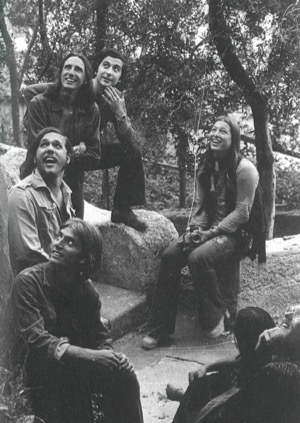
After finishing art school in the late 1960s, Toni started playing in the city’s many jazz and rock clubs, hanging out in Positano when he wasn’t on drumming duty. Quickly establishing himself as a fixture of the local scene, he featured on several of Napoli Power’s landmark albums from the 1970s: to name only a few, the seminal weird-prog-journey Aria [Air] (1972) by his neighbour and good friend Alan Sorrenti, folk-rocker Edoardo Bennato‘s I Buoni e I Cattivi [The Good and the Bad] (1974)and my personal favourite, the ethereal Dialoghi del Presente [Dialogues of the Present] (1977) by Luciano Cilio.
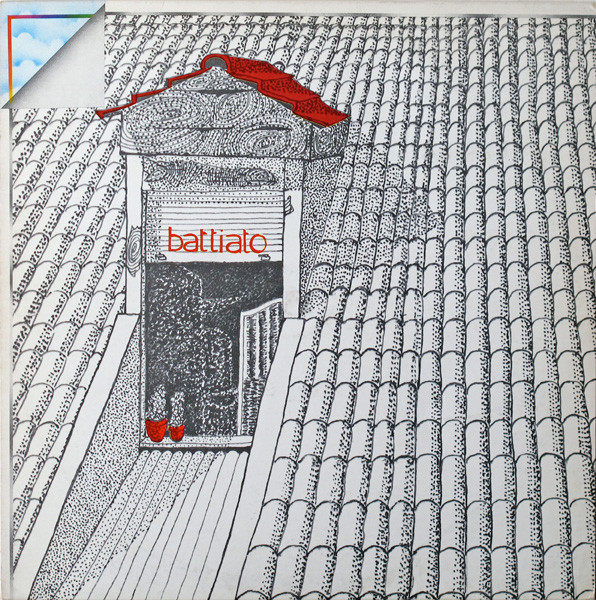
Following a brief stint in the prog-rock outfit Moby Dick, essentially a Led Zeppelin clone, and a long apprenticeship as a session drummer, Toni convinced Renato Marengo to produce his eponymous 1974 debut album. They will record three more albums together: Processione sul Mare [Procession on the Sea] (1976), Gente Distratta [Distracted People] (1977) and La Banda del Sole [The Sun Band] (1978).
Introducing his performance at the Napoli Nuovo Sound Festival in 1977, Toni expanded on the philosophy behind his peculiar instrument of choice. [redacted for clarity]
I never imagined a musician could express himself with just a couple of pans; I thought you needed instruments that cost millions. Then I met a parcheggiatore [an illegal parking attendant] who played a shoe box like a guitar and had an incredible sound. I asked him how did he do it and he said: “Look, uagliò, I’m dirt poor; I invented this out of sheer necessity.” I realised that people – especially those who can’t afford to buy instruments or certain things – come up with their own solutions and in doing so, they create alternative means of production. And what’s more, that musician has given his instrument his own particular sound: it might have been the sound of desperation, but it was his sound. So I set out in search of sounds that were my own, and I found them in the kitchen.
Esposito’s speech was almost Marxist in his implications and reflected very well the new social conscience of the city, which in 1975 elected its first communist mayor, Tunisia-born painter and Resistance hero Maurizio Valenzi. Banging the pans becomes an act of reclaiming the means of production: technology becomes a tool for freedom, as Sohn-Rethel argued in his Das Ideal des Kaputten. Fifty years later, Naples was still showing a different way of doing things. I am sure Sohn-Rethel would have gladly included the drumming pans in his happy arsenal of the broken. Well, technically they weren’t broken, but they were still devices repurposed to enable one’s artistic expression.
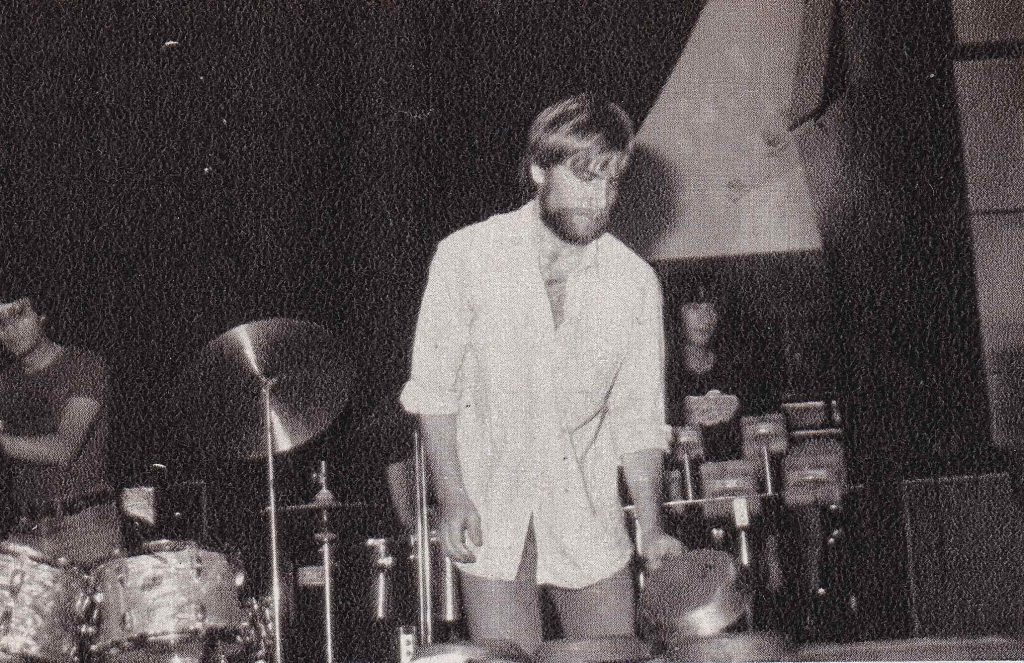
In his festival speech, Toni also addressed the fact that his music isn’t a solo creation, but something “borrowed” from the people, almost a sound portrait of life in the streets. Having trained as a painter in art school, in his practice listening and observing, image and sound, become one and the same. In a 1976 interview with the Italian music magazine ‘Ciao 2001’, he provided a detailed account of his unconventional compositional method:
My point of contact with life is the image, through which life reveals itself to my senses. This image immediately transforms within me into a rhythm, and reproducing it rhythmically is the first stage of my musical composition. On top of this rhythmic foundation, I layer harmonies (hints of folk tunes, voices and sounds) to complete the sonic visualisation. At this stage, I step in to strike a beat, fracturing and then reassembling the rhythmic and melodic lines. This process mirrors what happens in real life when you see something or someone that you like: your first impulse is to touch it. Creating rhythm is my way of touching life and extracting its energy. This is why, beyond the drums, I need to play other instruments, such as pieces of wood and my famous pans. They represent life’s fundamental rhythmic diversity. If I could, I’d play the buildings, the trees, the people. Do you see what I mean?
This idea of life becoming rhythm can be heard, almost synesthetically, in the opening track of his first LP, ‘Rosso Napoletano’ [Neapolitan Red]. The long suite begins with a beat, layers voices from the streets and slowly introduces the main theme and its variations. It’s like a jazzy, sinuous stroll through the rhythms of the city, accompanied by percussion and saxophone flourishes.
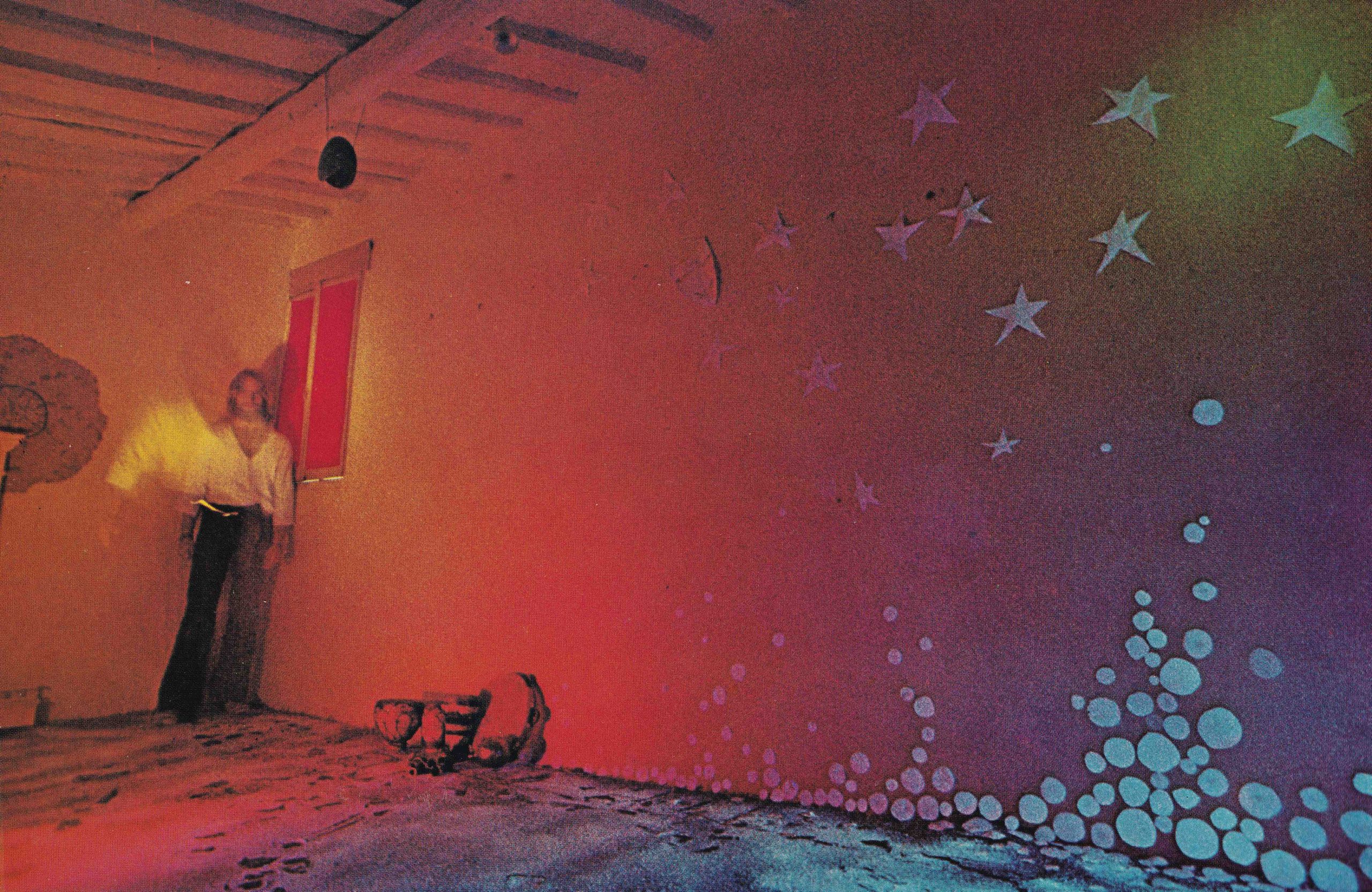
One is instantly transported into the alleys of Naples, the atmosphere almost tactile. The title and the concept for the piece, as producer Marengo remembered, were born during a dinner in a trattoria where Toni began describing “this Neapolitan dawn, a red that fills the sky, spills over the buildings and slides through the alleys and across the walls, colouring the skin and clothes of the people”.
The song was written by Toni and Paul Buckmaster, the renowned arranger who had worked with Elton John and Miles Davis. Buckmaster’s mother was Neapolitan and it was in Naples that he had studied composition. A good friend of Shawn Phillips, it was through this connection that he was eventually introduced to the musicians of the Napoli Power. Marengo recruited him to co-produce the record, for which he also co-wrote ‘Il Venditore di Elastici’ [The Rubber Band Seller], showcasing the range of Toni’s kitchen pans.
We’re still in post-prog territories, influenced by Weather Report, with the ghost of Miles Davis’ Bitches Brew looming in the distance. What’s unique, however, are the colours, the melodies which echo folk tunes, and a very distinct Mediterranean vibe. Certain passages even remind me of the soundtracks of contemporary Italian giallo cinema, such as the groovy funk of ‘L’eroe di plastica’ [The Plastic Hero].
The following LP Processione sul Mare was composed during Toni’s first solo tour, which shows in the short, energetic and compact structure of the songs. The album is sunnier than its predecessor; without Buckmaster, Toni’s personality shines even brighter. The timbral richness of his unconventional instruments takes centre stage, as in the eponymous closing track: a playful march where the sound of marimba and pans dissolves into the roar of waves crashing.
Once again, we are listening to depictions of street life: it’s an explosion of energy, as in the exuberant ‘Mercato di stracci’ [Rag Market], where we’re not just strolling, but running through the alleys of Naples. There’s also room for serene ballads like ‘Fiaba Moresca’ [Moorish Fairy Tale], the Italo-prog-jazz of ‘Bancarella’ [Market Stall] and melodies that draw inspiration from folk traditions as in ‘La partenza’ [The Departure].
The last two records of Toni’s instrumental period don’t add much to his trusted formula of Mediterranean jazz-rock with hints of prog and traces of folk. Gente Distratta is more jazzy and presents his band tighter than ever, with the rhythm section enriched by the work of American percussionist Karl Potter on the congas. La Banda del Sole instead reinforces the connection to Neapolitan tradition with a mandolin playing the main theme in the opener, while still honouring its transatlantic jazz influences with a cover of Pharoah Sanders.
This string of records was quite successful and established Toni as one of the most interesting voices of the Naples Power. However, by the end of the decade things were changing: punk swept away 70s rock, electronic music was on the rise and political commitment gave way to a generalised hedonism.
Following this shift, in the early 1980s Esposito changed producer and became Tony to make himself more appealing for international audiences. Embracing the Italo-disco trend, his sound turned more commercial, leading to the international breakthrough of ‘Kalimba De Luna’. The exotica hit was covered by Boney M and turned Esposito into an overnight sensation. But that’s a different story, one which is less about finding an alternative way into modernity and more about aligning with it.
- Literature critic Martin Mittelmeier details the circumstances of their Southern Italian stay in his brilliant Naples 1925: Adorno, Benjamin, and the Summer That Made Critical Theory: “equipped with 600 quotations from German Baroque tragedies” Benjamin was hoping that a change of scenery would help him finish his habilitation thesis, The Origin of German Tragic Drama, while Latvian theatre revolutionary Lacis had chosen Capri “because the climate was beneficial to her daughter’s health. And, of course, among the possible climate-friendly locations, that island, where the exiled revolutionary Maxim Gorky had founded a party university in 1909, quickly made it onto the shortlist”. ↩︎
- Sohn-Rethel coined the expression Glücksarsenal des Kaputten in another essay dedicated to Naples, Eine Verkehrsstockung in der Via Chiaia [A traffic jam on Via Chiaia], referring to a broken motorbike engine that had been repurposed as a cream shaker by the owner of a café. My translation doesn’t really capture the breadth of it, as the German Glück means both fortune and happiness. ↩︎
- NCCP were ideally expanding on Alan Lomax’s work documenting Italian traditional music. In 1954, Lomax embarked on a six-month field trip through Italy with fellow ethnomusicologist Diego Carpitella, which culminated in two records for the Columbia World Library of Folk and Primitive Music. His archive is accessible here: https://archive.culturalequity.org/field-work/italy-1954-1955 ↩︎